
Characters
THE ARCHANGELS.
Messengers of the Most High

Gabriel
The Voice of the Eternal
Gabriel stands as the herald of heaven in the Archangel Chronicles, the one who speaks when the will of the Eternal must be made known.
He is not often seen, but when he appears, the world changes. His presence carries authority that cannot be mistaken. He does not persuade or argue; he declares. Through him, the hidden purposes of heaven are revealed in moments that shape the course of history.
Gabriel is defined by clarity, authority, and divine purpose. He is a messenger who speaks with absolute certainty, calm, unwavering, and beyond doubt. He is neither harsh nor gentle, only true.
There is no hesitation in him, no uncertainty. He embodies the word once spoken, the message that cannot be recalled.
Gabriel serves as the bearer of revelation. He announces the turning points of the story, reveals truths that no human could discover alone, and speaks into moments where heaven must intersect with history.
His voice echoes through the Chronicles as a reminder that the story unfolding is not accidental; it is ordained.
Gabriel represents: the voice of divine intention; the certainty of promise fulfilled; and the moment when mystery becomes revelation.
Through him, the Star Bearers—and the audience understand that what they are witnessing is part of a greater design.
Gabriel is the word spoken into the world; the voice that calls history into alignment; the messenger through whom heaven declares: this shall be.
Raphael
The Guide of the Journey
Raphael is the most present and intimate of the archangels within the Archangel Chronicles—the one who walks beside humanity.
He is a healer, guide, and quiet companion, moving through the world often unseen, yet always near to those who are called. It is Raphael who first encounters Adam, and in doing so, sets the entire journey in motion.
Raphael is marked by compassion, wisdom, and patience. Gentle in presence, yet profound in knowledge, a guide who reveals only what is needed, when it is needed, he is deeply attentive to the struggles of those he leads. He does not overwhelm with power. Instead, he invites trust.
Raphael serves as the guide of the Star Bearers. He calls Adam into the journey, leads Sophia and others toward understanding, and remains a steady presence through uncertainty and trial.
Where Gabriel declares, Raphael walks.
Raphael represents the nearness of heaven to human experience, the process of guidance, growth, and transformation, and the quiet assurance that no one walks the path alone. He is the bridge between the divine and the human journey.
Raphael is the hand extended in the dark, the voice that says, “Come, and do not fear,” the unseen companion who leads the way forward.
Michael
The Guardian of the Threshold
Michael stands as the defender in the Archangel Chronicles—the one who confronts darkness and ensures that the path of the story remains open.
Where danger gathers, Michael is near.
He is not a figure of quiet presence, but of decisive force. His role is not to guide or to speak, but to stand, to oppose what must be opposed, and to protect what must not be lost.
Michael is defined by strength, resolve, and unyielding purpose. He is a warrior who does not falter. He is silent, direct, and immovable, focused entirely on the protection of what is entrusted to him. There is no hesitation in him, only action.
Michael serves as the protector of the unfolding story: he confronts forces that seek to disrupt or destroy the journey; he safeguards key moments and individuals and ensures that the path toward fulfillment is not overtaken by darknes. His presence often marks moments of unseen conflict.
Michael represents: the reality of spiritual conflict; the necessity of protection in the face of opposition, and the assurance that darkness does not go unanswered.
He is the force that stands between the story and those who would end it.
Michael is the sword at the edge of the light.
The guardian of what must endure.
The one who stands when all others would fall.
And through him, the Chronicles remind us: the story is not unopposed, but neither is it unguarded.
Oh, the battle’s not with swords or flames,
It’s fought in hearts that dare to stay.
When the darkness presses in,
Hold the fire, don’t let it stray.
Walls can’t hold us, time can’t bind us,
Love will find you where you are—
You were never left forgotten,
You were always seen by stars.
We sing of love that burns like fire,
Of dust that’s filled with sacred breath.
You are more than you imagine,
Even shadows hide a promise yet.
Though the Enemy is waiting,
He can’t steal what you possess—
A soul that never stops its searching
For the one who called you blessed.
Son of the Archangels: "Servants of the Most High"
The Women of
the Archangel Chronicles
Sophia
The Witness of the Light
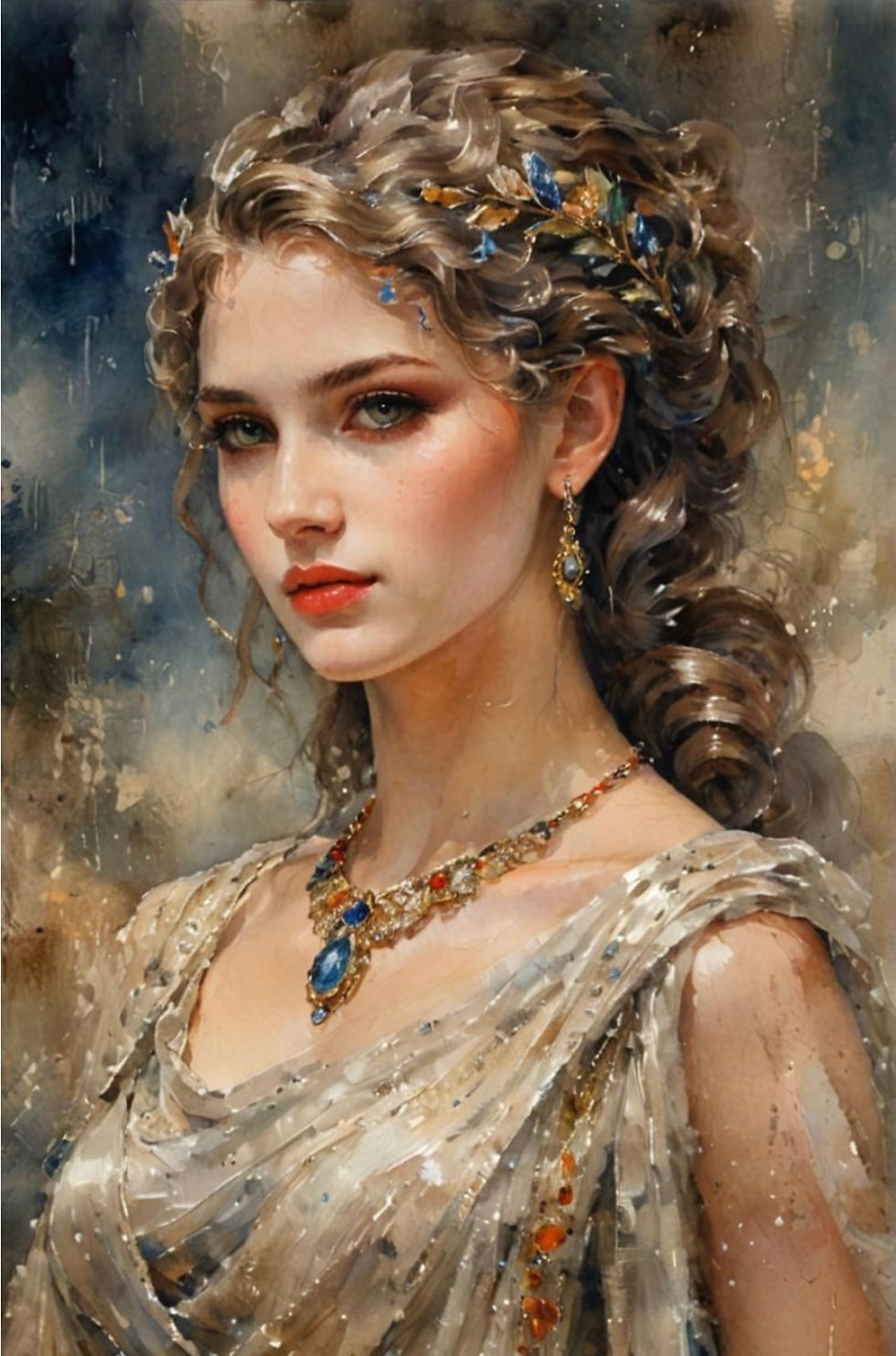
Sophia stands at the heart of the Archangel Chronicles—not as a conqueror or ruler, but as the one who sees, remembers, and understands.
It is through her voice that the story is preserved.
A woman of quiet strength and deep perception, Sophia possesses a rare gift: the ability to discern meaning beneath events, to recognize the movement of heaven within the unfolding of history. Where others see only circumstance, she perceives purpose.
She is both participant and observer—walking beside the Star Bearers while also recording their journey in the scrolls that carry their story forward.
Sophia is defined not by outward power, but by inner clarity:
-
Thoughtful, perceptive, and deeply compassionate
-
Attuned to both the human and the divine
-
Courageous in a quieter, enduring way
She does not seek the path of greatness, yet she is drawn into it. Her strength lies in her ability to listen, to remember, and to remain faithful even when the meaning of the journey is not yet clear.
Sophia is the spiritual and narrative center of the Chronicles.
-
She serves as the chronicler, preserving the journey of the Star Bearers
-
She becomes a bridge between heaven and earth, receiving guidance through visions and encounters
-
She is among the first to understand that the journey is part of a greater design.
Through her, the audience experiences the story not only as history, but as revelation.
Sophia’s path is one of awakening. What begins as curiosity becomes a calling. What begins as observation becomes participation.
Guided by the mysterious presence of Raphael, she is entrusted with a vision: a star to follow, and a journey that will take her far beyond the world she knows. Her faith is tested by distance, loss, and uncertainty, yet she endures, holding fast to what she has seen and what she believes.
Sophia represents something essential within the story:
-
The voice that remembers
-
The heart that believes
-
The soul that seeks understanding
If Adam is the one who acts, and others are those who lead or protect, Sophia is the one who reveals the meaning behind it all. Without her, the story would pass like wind over the desert. Through her, it becomes something enduring.
Sophia is not merely a character. She is the witness. The keeper of the story. The listener of heaven’s voice. The one who ensures that what was seen, heard, and lives is never forgotten.
She moved in linen pale as dawn,
Unadorned and bright;
Her eyes held all the ordered stars,
Her thoughts were carved in light.
She spoke of One and intellect,
Of virtue, soul, and form—
Of how the spirit must ascend
Beyond the fleshly storm.
He listened as the heavens turned
Above the temple stair;
He loved the fire within her mind
More than her golden hair.
“I am betrothed to truth,” she said,
“To intellect and sky.”
“And I,” he breathed, “to something more
I cannot yet deny.”
He knelt beneath her trembling hands,
No claim, no chain, no name—
Only a vow of silent love
Too sacred to proclaim.
Ballad: When I Look at Sophia

Axia Panoplias, She Who is Worthy of Armour
Axia is one of the most formidable and unforgettable figures in the Archangel Chronicles—a warrior, a charioteer, a woman forged in both triumph and loss, and a mother.
Born on the steppes of what is now Ukraine and Central Asia, a Scythian world of riders and open skies, she carries within her the strength of the steppe: fierce independence, unyielding courage, and a spirit that refuses to bow to fate. Known across kingdoms for her unmatched skill in the chariot arena, Axia becomes a living legend—her name spoken with equal parts admiration and awe.
Yet her story is not one of glory alone.
Beneath her strength lies a deeper journey, one marked by grief, sacrifice, and transformation. Her rise in the arena, culminating in the legendary race remembered as the Rise of the Red Phoenix, reveals not only her physical mastery but her refusal to be defined by death itself. She is a figure who falls, rises, and rises again, stronger each time.
Within the fellowship of the Star Bearers, Axia represents a different kind of strength: not the quiet wisdom of scholars or the guiding light of angels, but the raw, hard-won resilience of one who has endured and survived. She stands as both protector and witness, a reminder that courage is not the absence of fear, but the decision to move forward despite it.
Her presence shapes the journey in profound ways:
-
She embodies rebirth and defiance in the face of death
-
She bridges worlds—warrior and seeker, strength and vulnerability
-
She challenges others, especially Adam, to confront their own limits.
In the end, Axia is more than a champion of the arena.
She is a symbol.
A flame that does not go out.
A life reclaimed from ashes.
The Red Phoenix who rises when all seems lost.
Oh worthy of armour, rider of flame,
Daughter of the wind-swept plain,
Hold fast your breath, hold fast your name—
Ride back from fire and pain.
For no dark tide nor whispered spell
Shall claim what heaven defends—
Oh worthy of armour, rise again,
The battle is not the end.
Her pulse beat wild, her breath was thin,
Her fever burned like war;
Yet slowly as the long night passed
The darkness lost its roar.
She whispered through the fading storm,
“I walked through ice and fire—
A curtain split, a shining path,
A light that would not tire.”
Camilla
The Silent Guardian
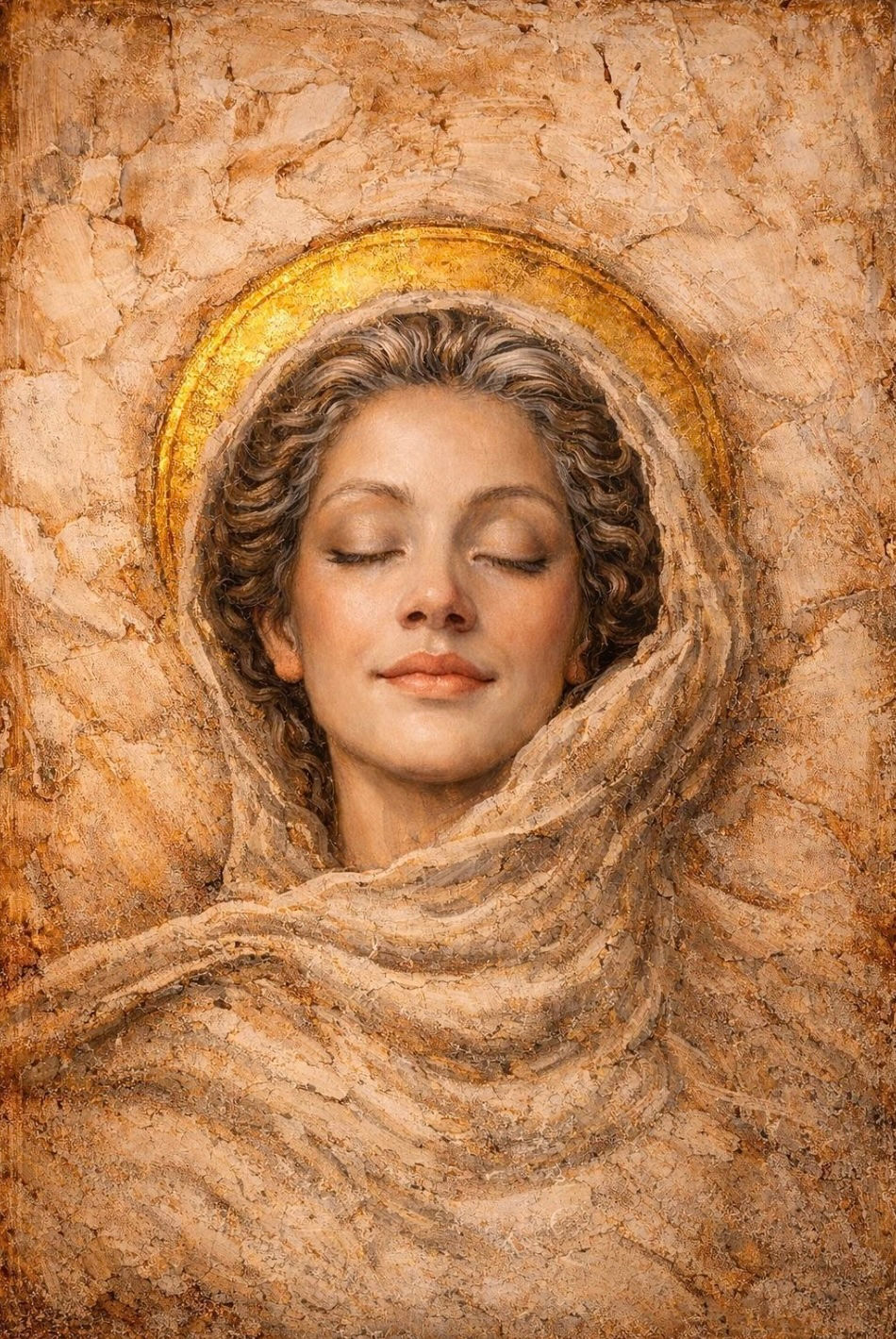
Camilla moves through the Archangel Chronicles like a shadow—unseen by many, yet always present where she is most needed. She is a protector, a watcher, and a force of quiet precision. Where others speak, she observes. Where others hesitate, she acts. Her loyalty is unwavering, her purpose clear: to guard what must be preserved, and to stand where danger gathers.
Camilla is defined by discipline, restraint, and hidden depth. She is skilled, vigilant, and highly perceptive, calm under pressure, decisive in action, reserved, speaking little but seeing much.
She carries herself with an almost otherworldly composure, as though she stands slightly apart from the ordinary flow of events. Yet beneath her controlled exterior lies a profound sense of duty—and a quiet compassion that reveals itself in rare but meaningful moments.
Camilla serves as both guardian and guide, particularly to Sophia. She protects the vulnerable within the fellowship. She moves ahead of danger, often sensing threats before they emerge. She operates in the spaces others cannot—between visibility and secrecy
Her presence allows the journey to continue when it might otherwise falter.
There is a mystery to Camilla that sets her apart. She appears when needed, understands more than she reveals, and acts with a certainty that suggests knowledge beyond ordinary experience.
Whether seen as a warrior, a protector, or something more, Camilla stands as a figure who belongs both within the world and just beyond it.
In a story shaped by prophecy and unseen forces, Camilla represents:
-
Protection in the face of unseen danger
-
Steadfastness when others are uncertain
-
The quiet assurance that the journey is not unguarded
She is the one who ensures that the fragile threads of the story are not broken before their time. Camilla is not the voice, nor the flame, nor the witness. She is the shield, the unseen presence at the edge of the firelight, the watcher in the dark, the one who stands between the story—and those who would end it.
The door was locked. The torches dimmed.
The surf below sang low and grim.
I knelt beside her, soothed her brow,
No empire mattered to us now.
She saw my face through pain’s wild sea—
“You again… why are you here for me?”
I whispered soft where her tears had run:
“To save your child. To save this one.”

Loukia
The Voice That Remembers
Loukia is the song at the heart of the Archangel Chronicles—a quiet yet powerful presence whose music carries memory, healing, and truth. Where others fight, lead, or record, Loukia sings.
Her voice is not merely beautiful; it is transformative. Through her songs, grief finds expression, sorrow is given shape, and hope is rekindled in those who have nearly lost it. In moments when words fail, Loukia’s music speaks.
Loukia is gentle, perceptive, and deeply attuned to the emotional currents of those around her. A gifted musician and singer, compassionate and intuitive, she carries both joy and deep personal sorrow. Her strength is subtle but profound. She does not command attention—yet when she sings, all listen.
Her bond with her mother, Kaliope, reflects one of her defining traits: a love that endures suffering and is transformed through grace.
Loukia serves as the emotional and spiritual voice of the Star Bearers. She preserves memory through song. She gives voice to suffering that others cannot express. She helps unify the fellowship through shared moments of music and reflection
Her songs often mark pivotal moments in the journey—times of departure, loss, revelation, and renewal.
Loukia’s music is more than art—it is a form of healing and remembrance. She sings in times of grief, giving dignity to loss. She sings in times of transition, helping others endure change. She sings in moments of revelation, echoing truths greater than herself. Through her, the story gains a deeper resonance—one that is felt as much as it is understood.
In a journey filled with danger, prophecy, and destiny, Loukia represents something essential:
-
The human heart of the story
-
The power of beauty in the midst of suffering
-
The truth that even in the darkest moments, something sacred can still be heard.
She reminds the Star Bearers—and the audience—that not all strength is seen in battle or action.
Some strength is carried in a song.
Loukia is the voice that remembers when others forget. The song that rises when silence would overwhelm. The quiet light that endures through sorrow. And through her music, the journey of the Archangel Chronicles becomes not only a story to be told—but one to be felt.
“I was born in a broken tower,
Where the lions wept, and the fountains died,
Where my mother sang to shadows,
And the gods forgot to cry.
But a whisper broke the silence,
Like a silver thread through stone,
And the star that walks in heaven
told me I was not alone. “

Mara ben Hannaniah
The Keeper of the Dawn’s Light
Mara ben Hannaniah stands within the Archangel Chronicles as a figure of quiet authority—one rooted not in power or spectacle, but in wisdom, memory, and faith. She belongs to the ancient traditions of her people, carrying with her the weight of history and the discipline of a life shaped by study, prayer, and discernment. Where others are drawn by wonder or urgency, Mara moves with deliberation, guided by understanding. She does not seek the path of adventure—yet she walks it with purpose.
Mara is thoughtful, disciplined, and deeply grounded. She is a woman of learning and spiritual insight, steady, composed, and perceptive, guided by tradition, yet open to revelation Her strength lies in her ability to interpret, to question, and to remain anchored even when the world around her shifts.
She is neither easily swayed nor easily deceived.
Mara serves as a voice of wisdom and discernment within the journey of the Star Bearers. She provides context to events that others do not fully understand. She draws upon sacred traditions to interpret signs and prophecies, and offers guidance in moments of uncertainty.
In a fellowship filled with seekers, she is one who helps others understand what they are seeking.
Mara’s worldview is shaped by a deep awareness of history and covenant. She recognizes that the events unfolding around them are not isolated, but part of a larger story—one long foretold and long awaited. Where others react, she reflects. Where others rush forward, she considers.
Her presence adds depth and gravity to the journey.
Mara represents something essential in the Chronicles: the continuity of tradition in a time of change; the interpretation of prophecy in the face of mystery and the grounding presence of wisdom amid uncertainty. She reminds the Star Bearers that their journey is not only forward—but also rooted in what has come before.
Mara ben Hannaniah is the keeper of memory that reaches beyond a single lifetime, the steady voice amid unfolding revelation. She is the one who reads the signs—and understands their meaning. And through her, the story of the Archangel Chronicles is anchored not only in wonder but in truth.
Before the sun walks the sky,
before the birds remember their names,
there is a silence thin as breath upon glass.
In that silence, we listen.
O Light that is not yet fire,
O brightness without heat,
You pass between the worlds
like a messenger unwearied.
You do not shout.
You arrive.
You touch the edge of the mountains
and they awaken without pain.
You rest upon the water
and it becomes a mirror of heaven.
You brush the eyelids of the watcher
and dreams loosen their grip.
Blessed are those awake in the blue hour,
for they hear what the noon forgets.
Blessed are the still,
for angels walk softly.

Mary
The Light Bearer
Mary is the human vessel by which the Divine was made manifest. She is the crux of our story. She is not a figure of power in the worldly sense, but as the one through whom heaven enters the world. In her, the unseen becomes visible. Through her, the promise becomes flesh.
She is at once humble and immeasurably significant—the quiet turning point upon which the story of the world begins to change.
Mary is defined by a rare and profound union of humility, strength, and unwavering faith. She is gentle in spirit, yet resolute in purpose, deeply attentive to the voice of God, bearing within her a peace that does not come from circumstance. She does not seek greatness, yet she accepts a calling greater than any other. Her strength is not found in action or command, but in surrender, trust, and endurance, a strength that will be tested by uncertainty, danger, and sorrow.
Within the Archangel Chronicles, Mary is the fulfillment toward which the entire journey moves. The Star Bearers are drawn across the world toward her, the signs in the heavens find their meaning in her child, the guidance of angels converges upon her presence.
Though she appears quietly, her significance reshapes every path that leads to her.
She is not merely part of the story; she is the reason the story exists.
Those who encounter Mary perceive something beyond words: a stillness that calms fear; a light that does not overwhelm, but invites; a sense that heaven has drawn near without force.
Through the eyes of Sophia and the Star Bearers, Mary is revealed not as distant or untouchable, but as profoundly human—yet touched by something eternal.
Mary represents the heart of the Chronicles and the greater story beyond them:
-
The meeting of heaven and earth
-
The fulfillment of long-awaited promise
-
The beginning of a transformation that will reach far beyond her own life
Her “yes” becomes the doorway through which hope enters history.
Mary’s importance does not end within the narrative—it extends into the wider story of faith, history, and human longing. She is: the mother of the Divine child who will change the world. A figure remembered across centuries as a symbol of faith and devotion. A witness to both the wonder and the sorrow that accompany redemption. Her life continues to echo long after the journey of the Star Bearers has ended.
Mary is not a conqueror, nor a ruler, nor a voice raised in power. She is the one who receives. The one who bears the light into the world. The quiet center around which all things turn. And through her, the story of the Archangel Chronicles opens into something far greater: the story of hope made flesh.
In a humble Galilean home, a maiden heard our call.
Heaven’s wisdom touched her mind; she offered us her all.
We hailed her courage and her yes, a kingdom without end,
The Child she carried shook the world, though darkness closed again.
We sing of love that burns like fire,
Of dust that’s filled with sacred breath.
You are more than you imagine,
Even shadows hide a promise yet.
Though the Enemy is waiting,
He can’t steal what you possess—
A soul that never stops its searching
For the one who called you blessed.
The Men of the
Archangel Chronicles

Adam
The Wanderer Called
Adam stands at the heart of the Archangel Chronicles: a man of dust and doubt, drawn into a story far greater than himself.
A physician by trade and a wanderer by necessity, Adam begins his journey not as a hero, but as one searching—restless, burdened, and uncertain of his place in the world. He is a man shaped by reason, skill, and experience, yet haunted by questions that knowledge alone cannot answer. It is this tension, between what he knows and what he longs to understand, that prepares him for the call.
Adam is deeply human—flawed, thoughtful, and capable of profound transformation. Intelligent, observant, and trained in the healing arts; skeptical, yet open to what he cannot explain; compassionate, though often guarded by doubt, he does not begin as a man of faith, but as one who must learn to trust what lies beyond reason. His strength is not in certainty, but in his willingness to continue forward—even when he does not fully understand the path.
Adam is the primary thread through which the story unfolds. He is the one first encountered and chosen by Raphael. Through his journey, the world of the Chronicles is revealed. He becomes a central figure within the League of Star Bearers.
The audience experiences the unfolding mystery largely through his eye: his questions, his fears, and his gradual awakening.
Adam’s path is one of transformation. What begins as a chance encounter becomes a calling. What begins as curiosity becomes commitment. He is given gifts he does not yet understand, drawn into a fellowship he did not seek, and led across lands and trials that challenge everything he believes.
He must confront the limits of his own knowledge, the reality of unseen forces, the cost of choosing to follow the call, and in doing so, he is changed.
Adam represents something essential within the Chronicles: the human response to the divine call, the journey from skepticism to faith, and the truth that ordinary lives can be drawn into extraordinary purpose He is not chosen because he is perfect, but because he is willing.
Adam is the wanderer who becomes a witness, the healer who must learn a deeper healing, the seeker who discovers that he himself has been sought. And through his journey, the story of the Archangel Chronicles finds its path, from doubt…to wonder…to belief.
Through the marble halls of learning,
Through the books of ancient lore,
Sophia’s truth within him burning,
Opened wide a hidden door.
Yet the wings of heaven found him,
Drew him far from all he knew—
To the steppes where storms surround him,
Where the Queen of Eagles flew.
O wanderer born of dust and dream,
Bearer of fire, the angels send;
Your name is anyone, it seems
But every wounded heart you mend.
Walk on, healer, chosen one;
Walk on ‘til the rising sun.
Adam, Adam—Anyone…
Your journey has begun.

Targitus / Abu
The Wanderer Called
Targitus—once known as Abu—stands among the most transformative figures in the Archangel Chronicles: a child who walks beside destiny, and a man who is ultimately shaped by it.
He begins as something small in the eyes of the world, a boy in the company of greater names, a cupbearer, a companion, a child who laughs, who runs, who plays, his days filled with mischief, loyalty, and wonder, often in the company of his ferrets, Atlas and Calliope.
Yet even then, something in him waits.
As Abu, he is marked by innocence and vitality. He is playful, quick, and full of life, deeply loyal to Adam and the fellowship, courageous in ways he does not yet understand. He walks among kings and warriors without rank or title—yet is never truly unnoticed. Though he bears no scars, and carries no name of weight, he stands close to moments that matter. He is present when the story begins to turn.
There comes a moment when the world shifts. Through encounter.
On the open steppes, beneath the wide and watching sky, the spirits of the wild are said to reveal themselves: bear, wolf, stallion, and stag, symbols of strength, endurance, and dominion. But for Abu, it is the eagle that answers: the lord of the heights the watcher from above, the creature that sees what others cannot. Their meeting is silent, mutual.irrevocable, nd from that moment, the boy begins to change.
Taken into the high places,where mountains cut the sky and the wind speaks with its oldest voice, Abu is apprenticed to a deeper way of seeing. He is taught not to command, but to listen. Not to seize, but to earn trust. Not to look, but to perceive.
Under the guidance of the eagle master, he learns the patience of stillness, the discipline of attention, the bond between human and wild. and in time, something extraordinary awakens within him.
In moments of quiet and focus, Abu begins to see as the eagle sees: the land unfolding from above, movement across great distances, the hidden patterns beneath visible events. This is not power in the ordinary sense. It is a gift, a burden, a widening of perception that separates him from the child he once was. He does not merely observe the world; he begins to understand its shape.
His transformation is not without cost. He endures the harshness of winter, the hunger of the wilderness, the physical trials of climbing, survival, and endurance. In one defining act, he ascends the heights to seize and save a young eagle from the nest of storms, risking his life in a test of courage, instinct, and trust. He descends changed. No longer simply a boy.
At last, he is recognized for what he has become. Before the gathered host, beneath torchlight and sky, he is given a new name: Targitus. Far-Seeing One, Master of Eagles, a man among warriors.
The name marks not only his transformation—but his place within the unfolding story.
Targitus / Abu serves as a bridge between worlds: between child and man, between the human and the wild, between what is seen and what is revealed.
He remains deeply connected to Adam and the Star Bearers, yet now carries a role that extends beyond companionship. He becomes: a scout of the unseen; a witness from above, a figure whose perception shapes the path ahead
Targitus represents one of the central truths of the Archangel Chronicles: that transformation is not given, it is forged; identity is not fixed, it is revealed over time; even the smallest among us may be called into greatness. His journey mirrors the deeper movement of the story itself, from innocence to trial, to awakening.
He was the child who followed and became the one who sees the laughter of the campfire, the silence of the mountain, the gaze of the eagle. And in the end, he is no longer merely part of the story; he is one through whom the story is seen.
O listeners—
hear what few have heard:
The boy closed his mortal sight
and opened another.
He saw the plains from heaven’s height,
saw wolves as drifting sparks,
saw armies crawling like iron serpents,
saw leagues unfold like scrolls of grass.
Thus was he given
the borrowed gaze of thunder.

Scarus the Brave
The Shield That Did Not Fall
Scarus the Brave is a man forged not in courts or temples, but in the crucible of war. Known among soldiers as one who would not break, his name was earned in distant campaigns: on the mountains of Hispania, in the forests of Germania, and across deserts where even the eagles hesitated to fly. He is remembered not for titles or rank, but for something rarer: he stood where others fell, he endured where others faltered, he held the line.
He is the shield behind which others live.
Scarus is the embodiment of discipline, strength, and unwavering loyalty. A veteran of countless campaigns, is was hardened by battle, but yet not emptied of humanity, loyal not to glory, but to duty. He does not seek recognition, nor does he question the path set before him. His life is governed by oath, simple, unadorned, and absolute.
And yet, beneath the iron of his resolve, there remains something deeper: a man who laughs by the fire, a teacher to a young boy, a soul capable of sorrow, though he rarely speaks it.
Scarus’ legend is not born of a single moment, but of many: standing alone against overwhelming odds, holding the line until help arrives, fighting across the far reaches of the empire, where memory fades but scars remain. He bears honors not as trophies, but as burdens carried without pride.
To some, he is a warrior without equal. To others, he is simply what a soldier is meant to be.
Within the Archangel Chronicles, Scarus enters as a man in service to power, carrying out the will of Honourius with precision and force. He is the one who seizes Adam and Abu, fracturing Adam’s relationship with Sophia and his new home. He acts as both adversary and guardian, though he does not yet understand the difference.
He stands close to the unfolding mystery, even as he remains bound to his orders. He comes into the story as a force, a blade of power, but then, unknowingly, he becomes a shield.
There comes a moment when Scarus begins to perceive what others have already sensed: that destiny does not always appear crowned or robed in authority. Sometimes it walks quietly. Sometimes it looks like a healer. Sometimes it stands unguarded and must be protected at all costs.
This recognition unsettles him. For a man who has always known what to defend, he must now ask why.
Scarus represents a profound truth within the Chronicles: that strength is not only for conquest, but for protection; that duty can become the doorway to transformation, and that even those who oppose the path may be chosen to serve it. He is the necessary force in a story of fragile beginnings, the one who ensures that what must endure is not left undefended.
Scarus the Brave is not a king, nor a prophet, nor a seeker of visions. He is the man who stands. The iron hand when all else fails. The wall that does not fall. The sword that becomes a shield. In a world where heaven moves quietly among men, it is often such a man who is set in place to guard eternity.
Come gather, you riders and scholars and seers,
You keepers of campfire and wine,
I’ll sing you a song of a man among men,
Of a soldier carved hard as a sign—
Not marble, nor bronze, nor laurel nor lyre,
But sinew and oath and scar:
Marius Cassius Scarus they named him,
The shield where the brave ones are.
Refrain
Sing, O sing of the iron hand,
The wall that would not fall;
When blades rang red on foreign sand,
He stood and faced them all.
No crown he wore, no throne he sought—
Just duty, plain and true;
Yet fate will raise the lowly wrought
When heaven has work to do.
The Ballad of Scarus the Brave
Theron Simonides
The Man Who Sees Through Power
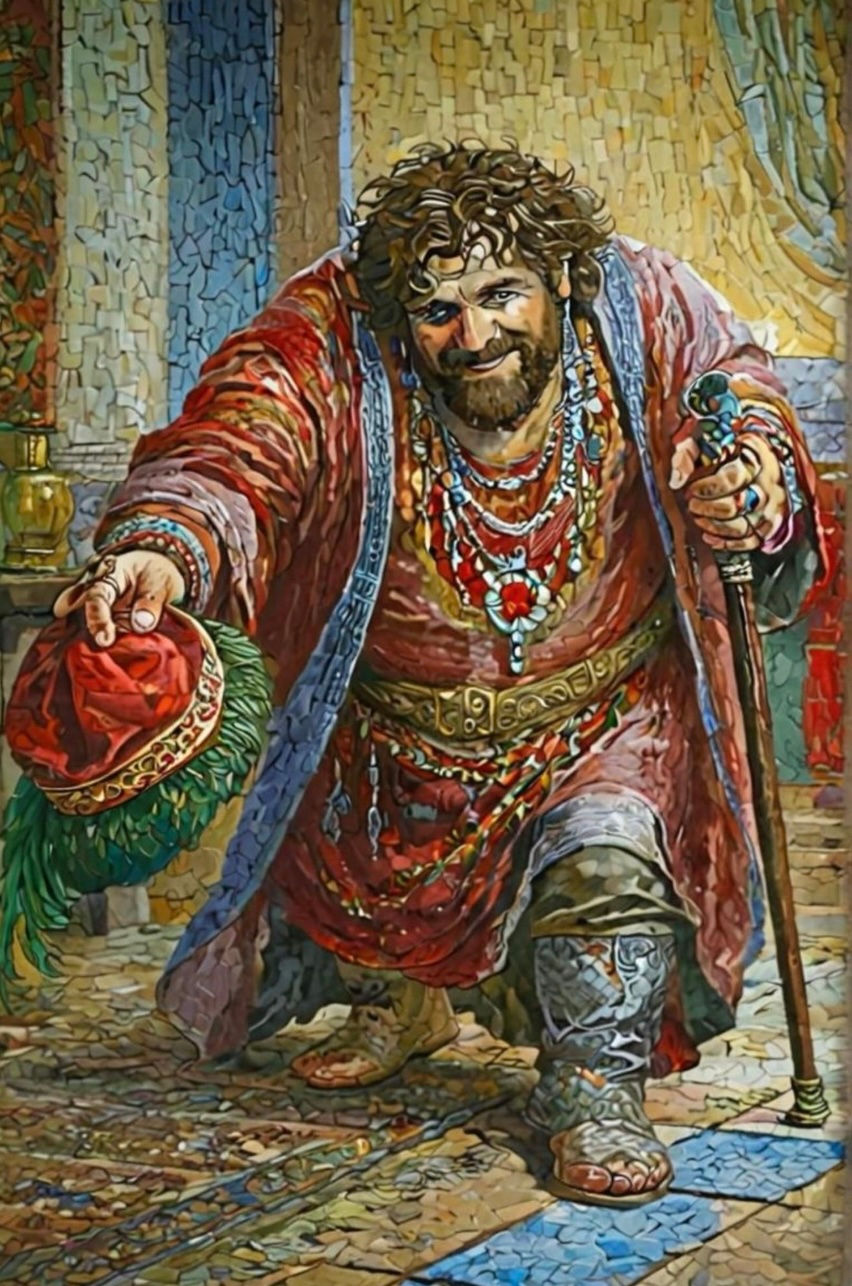
Theron Simonides moves through the Archangel Chronicles as a man shaped by the structures of the world—politics, influence, and the subtle currents of power that govern empires. He is larger than life, a bon vivant, an impresario. He is not a warrior, nor a mystic, nor a dreamer. He is something rarer: a man who understands how the world truly works.
Theron is intelligent, measured, and deeply perceptive; he is skilled in reading people, motives, and hidden intentions. Strategically minded and politically astute, he knows how to put on a show, but yet he is calm, deliberate, and rarely surprised. He has lived within systems of power long enough to see both their strength and their illusions.
Nothing easily deceives him.
Theron is the interpreter of worldly power within the journey of the Star Bearers. He understands courts, rulers, and the machinery of empire; he recognizes dangers others might overlook and helps the fellowship navigate situations where influence matters as much as courage.
Where others perceive events spiritually or emotionally, Theron perceives their political reality.
Theron begins as a man grounded firmly in the tangible world of power, authority, and strategy. Yet as the journey unfolds, he is confronted with something that does not fit within these frameworks. He must grapple with a truth he cannot control and finds forces at work beyond calculation.
This tension becomes central to his character.
Theron represents a crucial dimension of the Chronicles: the world as it is governed by human systems; the intersection of earthly power and divine purpose, and the realization that even the most carefully ordered structures are not the final authority. He ensures that the story remains grounded in the realities of empire, politics, and consequence.
Theron Simonides is the man who understands power, but must learn its limits. He is the strategist, the schemer who encounters mystery, the observer who is drawn into belief.

Arsalion
Spear of Sarmatia
Arsalion stands among the Archangel Chronicles as a figure of unyielding strength, born of the steppes, forged in war, and bound by honor that runs deeper than blood.
He is not a man of many words. He is a man of presence. Where Arsalion stands, the ground feels held.
Arsalion is defined by discipline, loyalty, and quiet intensity. He is a warrior of the Sarmatian steppes, trained in the arts of mounted combat and the spear. He is steady, deliberate, and unshaken in the face of danger. He speaks little, but when he does, his words carry weight. His strength is not reckless, but controlled, precise, and purposeful.
Raised in a world where survival is earned daily, Arsalion embodies the древний code of the riders: honor above life; loyalty above comfort, endurance above all. He rides as one born to the wind, his spear an extension of his will. To his enemies, he is relentless. To his allies, he is immovable.
Within the journey of the Star Bearers, Arsalion serves as both protector and enforcer. He stands as a physical guardian in times of danger. He supports Axia and the Sarmatian host with unwavering loyalty. He ensures that the fellowship can endure threats that words alone cannot resolve.
He is not drawn by prophecy or vision, but once committed, he does not turn away.
Arsalion’s loyalty is deeply personal. It is seen most clearly in his bond with Axia, the Red Phoenix. He recognizes her strength and stands beside it. He shares in the unspoken understanding of those forged in hardship. He follows not out of obligation, but out of chosen allegiance. Through this bond, his character reveals a deeper dimension: one of trust, respect, and quiet devotion.
Arsalion represents a vital force within the Chronicles: the strength that sustains the journey in its most dangerous moments, the embodiment of honor lived, not spoken, and the reminder that some roles in the story are not to lead or to interpret, but to stand and defend. Without figures like Arsalion, the fragile path of the Star Bearers would not endure.
Arsalion is the spear that does not waver, the rider who does not yield. The strength that asks for no recognition. And in a world where unseen forces shape the course of history, he is the one who ensures that those chosen to carry the light live long enough to fulfill it.
He came with courtesy, grave and strong,
No boasting on his breath;
“I win no love by secret wrong,
Nor hide my blade in death.
If I be worthy, let her see
Before the host and sky—
Let skill and truth my herald be,
Not trickery nor lie.”

Honourius
The Man Who Chose Silence
Honourius stands within the Archangel Chronicles as a figure of power, intellect, and deep contradiction, a man shaped by Rome, yet ultimately at odds with it.
He is an aristocrat, a senator, a merchant prince, a strategist, and a master of systems: trade, influence, and the quiet negotiations that move empires without armies. He understands the language of power, gold, ships, alliances, and wields it with precision.
But beneath this mastery lies a conflict that defines him. For Honourius is also a father.
Honourius is intelligent, calculating, and deeply perceptive. He is a man who understands the machinery of empire. Skilled in negotiation, strategy, and survival, he is measured, controlled, and rarely overtaken by emotion. He has learned to live within a world where truth is often dangerous, and silence is often the price of survival.
Yet beneath this discipline lies something Rome cannot account for: a love that cannot be measured; a loyalty that cannot be bought.
Honourius moves within the highest levels of Roman and provincial power, a world where wealth determines influence, law is shaped by those who wield it, and human lives are often reduced to transactions.
He has seen what Rome demands. He has learned what it costs to resist. And for much of his life, he has endured by choosing carefully what to say and what to leave unspoken.
There comes a moment when calculation fails, when the systems he understands demand something he cannot give: his daughter, her freedom, and her future.
In this moment, Honourius is forced to confront the truth he has long avoided: that some things cannot be negotiated; that some truths must be lived, even if they cannot be spoken. He does not rise in rebellion. He does not declare defiance; instead, he chooses silence. But it is not the silence of fear. It is the silence of sacrifice.
Honourius serves as a catalyst of disruption and consequence within the Chronicles. His actions set key events into motion, including the capture of Adam and Abu. He operates at the intersection of commerce, politics, and hidden agendas. He embodies the tension between worldly power and moral cost. He is both architect and victim of the systems he navigates.
Honourius understands power, but he comes to understand its limits. Gold cannot protect what is truly precious. Influence cannot redeem what is surrendered. Silence cannot erase what the heart knows. His journey is not one of outward transformation, but inward reckoning.
Honourius represents one of the deepest themes of the Archangel Chronicles: the cost of living within unjust systems; the tension between power and conscience; the truth that love may demand the surrender of everything else. He is a reminder that not all acts of courage are seen—and not all sacrifices are remembered.
Honourius is the man who understood the world, and chose, at last, to stand against it in the only way he could, not with sword, not with voice, but with silence. A silence that cost him his name, his place, and perhaps his life so that another might walk free.
In marble halls where torches gleam,
Where vows are bought, and gods are named,
I learned the cost of speaking the truth
In a world that feeds on flame.
Rome buried daughters in the ground
And called the darkness law,
But one small breath escaped the grave
And taught my heart to fall.

Melchior
The Seer Who Waited for the Star
Melchior stands within the Archangel Chronicles as a figure of profound stillness and vision—a man who does not seek attention, yet commands it the moment he arrives. He is not merely a sage. He is one who has waited.
Melchior is defined by wisdom, restraint, and a depth of perception that transcends ordinary understanding. He is a priest, philosopher, and master of ancient traditions, a man who speaks rarely, but never without purpose, one who perceives not only what exists, but what is unfolding. He carries time upon him like a mantle. Each word spoken is weighed, each silence is intentional. There is thought behind his gaze—but more than thought: there is vision.
Melchior belongs to an ancient lineage of watchers—those who have studied the heavens not merely for knowledge, but for meaning. He has spent a lifetime reading the movements of the stars, interpreting signs that others dismiss as coincidence, and seeking the will of the divine written across creation.
Yet even he recognizes that what appears in the sky in this moment is unlike anything before: not an omen, or a pattern but a summons.
When the star appears—living, radiant, and calling—Melchior is among the first to understand its significance. He recognizes that it points not to a place, but to a person. He hears in its light the echo of angelic proclamation, and understands that this is not knowledge to be studied, but a truth to be followed. Where others question, Melchior responds with certainty: “This is an invitation.”
Melchior’s wisdom is not confined to the heavens. He is also a counselor to rulers—one who understands the nature of true authority. To kings such as Gondophares, he teaches that power must be tempered by justice, authority must be rooted in service, and no earthly throne stands above the will of the Most High.
He speaks of a greater kingship yet to come, one not established by sword or wealth, but by righteousness, truth, and mercy.
Melchior serves as a prophetic anchor within the Archangel Chronicles: he confirms the visions and callings of others, including Balthazar; he helps define the purpose of the Star Bearers; he interprets the deeper meaning of events as they unfold. He does not lead through command. He leads through understanding.
Melchior represents one of the central truths of the Chronicles: that wisdom is not merely knowledge, but perception aligned with truth; that prophecy is not prediction, but recognition of what is already being revealed, and the greatest authority is found in humility before the divine. He is the one who recognizes the moment for what it truly is.
Melchior is the man who waited for the star, and knew it when it came. He is the voice that speaks when silence has ripened into truth, the seer who understands before others can name what they see, and when he lifts his eyes to the heavens, he does not search—he remembers.
Beneath the vault of heaven’s fire,
Where halos blaze and stars aspire,
He stands with robe and solemn eye,
A keeper of the realms on high.
The box he holds, adorned in gold,
With ancient runes and secrets old,
Is not of gems or coin or stone—
But bears a gift of soul alone.
No mortal craft nor empire’s pride,
Could ever forge what dwells inside.
For in that chest, both small and deep,
Lies what the gods and angels keep:
The breath of peace in silent lands,
A healing born of unseen hands.
The light that mends a broken heart,
And pulls the self from self apart.
It holds a song not yet been sung,
In every tongue, to every young—
A memory of love unshaken,
By time undone, yet never taken.
This gift, he guards with tender might,
To pass to those who seek the light.
Not bought, not sold, not earned by fame—
It answers only to your name.

Gondophares
The King Who Learned to Bow
Gondophares stands in the Archangel Chronicles as a ruler of immense power, a lord of cities, commander of armies, and sovereign over the eastern reaches of the known world.
He is a king shaped by conquest. His authority is unquestioned, his will is enforced, and his presence commands fear. Yet beneath the crown lies something deeper, something restless, ancient, and unresolved. For within Gondophares's life, a second nature: the tiger
Gondophares is a man of strength, discipline, and commanding presence. A warrior-king accustomed to obedience and control, strategic, intelligent, and unyielding in rule, he is capable of both grandeur and severity. He governs as many rulers do: through strength, fear, and the weight of authority.
Yet unlike many kings, he is not blind to himself. Something within him watches.
In vision and dream, Gondophares encounters the truth of his own soul: a hunter moving through shadow and silence, a being sustained by fear and dominance, a power both majestic and dangerous.
This tiger is not an enemy. It is himself. It is the instinct that has shaped his rule, the force that has allowed him to conquer, to command, to endure. But it is not the end of his story. He has an encounter with the light.
Drawn beyond the limits of power and understanding, Gondophares confronts something no king can command: a child, unarmed, unthreatening, yet carrying a presence that no army could oppose.
Before this light—this quiet, unshakable authority, something extraordinary happens: the king bows. Not in defeat. But in recognition. For the first time, Gondophares understands, there is a kingdom not built on fear, a power not sustained by force, a sovereignty that does not need to conquer.
This encounter does not strip Gondophares of his strength. It redefines it. The tiger within him is not destroyed,but mastered. The king who ruled through fear begins to rule through purpose. Authority becomes responsibility, not domination.
He returns to his throne changed—not weaker, but truer.
In time, Gondophares is seen again—not as a conqueror, but as a restorer. The land that once knew war now hears another sound: trumpets, voices, the rising cry of hope. He enters his city not as one who has taken, but as one who has endured, and now brings peace. His crown, once bent by conflict, shines again. His people gather not in fear, but in welcome. His rule becomes a sign that strength can serve something greater. The king who once inspired trembling now inspires song.
Gondophares serves as a living arc of transformation within the Archangel Chronicles. He brings the full weight of earthly kingship into the fellowship of the Star Bearers, and wrestles openly with the meaning of power, fear, and destiny. He becomes a witness to the truth that even kings must change.
His journey bridges two worlds: the world of conquest and the world of renewal.
Gondophares represents one of the deepest themes of the Chronicles: that true power is not in domination, but in transformation; that even the strongest must confront what lies within; that the highest kingship is found not in ruling over others—but in serving something greater. He is the answer to a question the story quietly asks: what should become of power when it encounters truth?
Gondophares is the king who ruled like a beast, but became a man, a hunter who learned to bow, a ruler who returned not with war but with peace. The tiger still lives within him—but it no longer rules him.
And when he rides again through the gates of his people, it is not fear that greets him— but song.
The Crown was bent, but now it shines,
his hands bear wounds as sacred signs.
he lifts his eyes to greet the land,
his people come to kiss his hands.
Lift your voice, O shining land,
Trumpets call the dawn!
Peace has set her golden wheel,
The Great King rides on.
Banners blaze, hearts are healed,
Night at last is gone.

Balthazar
The King Who Chose the Star
Balthazar stands among the Archangel Chronicles as a king of great learning and greater humility, a ruler who looked beyond the power he possessed and chose instead to follow a light he could not command.
Born a prince in the highlands of East Africa, beneath skies ancient and unbroken, he was raised among courts, scholars, and traditions that stretched back through centuries. Known in his youth as Bazen, he was shaped by both royal expectation and a restless search for meaning.
He was not content merely to rule. He sought to understand.
Balthazar is defined by wisdom, curiosity, and a deep openness to truth. Here is a king educated in languages, philosophy, and the sciences, a student of the heavens and the patterns of the stars, thoughtful, measured, and guided by both intellect and intuition; he possesses authority, but does not cling to it. His strength lies not in dominance, but in his willingness to question, to seek, and ultimately, to kneel.
Before he becomes a pilgrim, Balthazar is a scholar of the cosmos: he studied the movements of the heavens and walked the halls of Alexandria, where knowledge from across the world converges. He learns to read the signs that others overlook.
Yet when the star appears, strange, living, and beyond calculation, he recognizes something that knowledge alone cannot explain. This is not a phenomenon. It is a call.
Drawn to the port of Adulis, Balthazar encounters others who have been summoned by the same light: Kings, warriors, sages, and seekers from distant lands, the figures who will become the Star Bearers
In this moment, Balthazar’s role begins to change. He is no longer only a king. He becomes a unifier.
Balthazar serves as a leader among the Star Bearers, not through command, but through presence. He helps bring together the diverse fellowship and recognizes the significance of their shared calling. He speaks with clarity at moments when the path must be named.
It is through him that the question is first asked: what story now begins? And through that question, the journey takes shape.
Though he begins as a king, Balthazar’s greatest act is not to rule, but to relinquish. He comes to understand that the child they seek will not reign as earthly kings do, and that power must give way to something greater. True authority lies in service, not dominion. In this, he undergoes a quiet but profound transformation.
Balthazar represents one of the central truths of the Archangel Chronicles: that wisdom must lead to humility; knowledge must yield to wonder, and even kings must learn to follow.
He embodies the moment when the world’s highest authority bows before something higher still.
Balthazar is the king who read the stars—and chose to follow one. He is the ruler who became a pilgrim; the seeker who gathered others into light; the voice that asked the question that began it all. And beneath the burning heavens, he is the one who understood this journey was never about power, but about the One toward whom all paths now lead.
He studied scrolls and sacred signs,
The languages of kings,
The secret dance of heaven’s lights
And what their turning brings.
He walked the halls of Alexandria
Where wisdom’s embers lie,
And charted paths of wandering stars
Across the midnight sky.
But in the fortieth year of life
A stranger star appeared—
It pulsed like some celestial heart
No astronomer had cleared.
It called him like a distant voice
Beyond the bounds of chart:
A flame that beckoned not the mind
But summoned soul and heart.
So down the royal road he rode
Toward Adulis by the sea,
Where ships from far Indus had come
With whispered mystery.
And there beneath the palace wall
Where merchants thronged the square
An eagle cried against the wind
And strangers gathered there.
Then Balthazar, the king of kings,
Looked on them one by one:
From steppe and sea and desert sands
Their wandering paths had run.
He lifted up his hand and said
“What story now begins?
For every road beneath this star
Has drawn the world within.”

Herod the Great
The King Who Could Not Sleep
Herod the Great stands in the Archangel Chronicles as a figure of immense power and profound unrest. He is a builder of cities, a master of political survival, and a king who rose to rule through cunning, force, and relentless will. Under his reign, Judea prospers outwardly: fortresses rise, temples are rebuilt, and his name is carved into stone. Yet beneath the grandeur lies something far more fragile.
Herod is a man haunted.
Herod is brilliant, ruthless, and deeply troubled. He is a master strategist, navigating the dangerous currents of Roman power, capable of great vision, and great cruelty. He is driven by fear as much as ambition. He trusts no one fully, not even those closest to him.
His strength lies in control. His weakness lies in the fear of losing it.
Herod’s legacy is written in stone: the expansion of the Temple in Jerusalem, great fortresses and cities across Judea, all monuments designed to outlast memory itself. He builds to secure his name. He builds to defy time. But no wall can silence what rises within him.
Herod’s world is filled with shadows: the memory of those he has destroyed; the suspicion that betrayal surrounds him; and the growing sense that something beyond his power is unfolding. He is a king who commands armies, yet cannot command his own thoughts.
Sleep eludes him. Peace abandons him.
When news comes of a child, a king foretold not by men, but by the heavens, Herod’s fear becomes something sharper. The star above Judea does not answer to him. It cannot be silenced, bribed, or destroyed. And so he does what he knows: He moves to eliminate the threat. Yet the more he acts, the more it becomes clear: this is not a power he understands.
Herod serves as the central earthly antagonist of the Chronicles. His court becomes a place of tension, intrigue, and danger, where his fear drives actions that shape the fate of many.
He stands in opposition to the quiet unfolding of a greater purpose, where the Star Bearers follow light. Herod seeks to extinguish it.
Herod represents one of the core tensions of the Archangel Chronicles: He is the false King, the clash between earthly power and divine purpose, the illusion that control can overcome destiny, the truth that fear, when left unchecked, leads to destruction.
He is not merely a villain; he is a warning.
Herod the Great is the king who built everything and trusted nothing. He is the ruler of stone and shadow, the man who feared a child more than an army, the sovereign who could command the world, but could not find rest.
And above him, beyond his reach, the star still burns.
Oh, beware the crown of the false king,
Bright as gold but forged in chains;
He will take what heaven has given
And claim it in his name.
You will cry on the day of sorrow
When the yoke you chose is laid—
For the throne of a false king rises
Where the true King is betrayed.

Brigomarus the Red
The Sword That Chose Mercy
Brigomarus the Red is one of the most haunting and transformative figures in the Archangel Chronicles. A man forged in violence, marked by guilt, and ultimately remade by mercy. He is not born into honor; he is made in suffering.
Sold as a child into a world that knew only power and survival, Brigomarus learns early that life is taken or lost and that mercy is a luxury few can afford. From the brutal arenas of the gladiators to the service of kings, he becomes a weapon: disciplined, feared, and unstoppable. Yet even the sharpest blade may one day be turned.
Brigomarus is defined by strength, endurance, and a deeply buried conscience. He is a warrior hardened by years of violence and survival, loyal in action, though not always in spirit. He is capable of great brutality, but yet ultimately, profound change. He is a man who has lived too long under the rule of force to believe easily in anything else.
And yet… he is not beyond redemption.
His rise is marked by blood and skill. He is a gladiator who survived where countless others fell; a fighter whose name became known across lands and courts, a captain in the service of Herod the Great, entrusted with power and command.
To those who employ him, he is invaluable. To those who face him, he is terrifying. But his strength comes at a cost.
There comes a moment when obedience becomes unbearable. In the aftermath of violence, when the cries of the innocent cannot be silenced, Brigomarus is forced to confront what he has become. No command can justify it. No gold can erase it. The sword that once felt like purpose becomes a burden.
And so, he does what few in his world would dare: He lays it down.
Brigomarus abandons his post, his name, and the life he has known. He walks into the wilderness not as a warrior, but as a man undone, carrying the weight of his past with him. There, at the edge of death, he encounters something he has never known: Mercy.
Through the intervention of Raphael, the healer, Brigomarus is given not judgment, but the possibility of transformation. He does not forget what he has done. But he is no longer defined only by it.
Brigomarus serves as one of the most powerful arcs within the Archangel Chronicles: He embodies the cost of serving unjust power, bears witness to the consequences of violence, and becomes a living example that even the most broken path can be turned.
His journey moves from instrument of destruction to seeker of redemption.
Brigomarus represents a central truth within the Chronicles: no life is beyond the reach of grace; guilt, when faced honestly, can become the beginning of change; and even those who have walked in darkness may yet choose the light.
He is not a hero in the traditional sense. He is something more difficult—and more human.
Brigomarus the Red is the sword that learned to fall still, the warrior who could not forget.
The man who chose not to remain what he had been, and in a story where heaven touches the world not only in power, but in mercy, he stands as proof that even the darkest road may yet lead toward the light.
Oh Brigomarus, the Red one,
Born in chains and blood and flame,
You served the crowns of iron men
And carried out their shame.
But even steel may break at last
When truth is finally seen—
And the darkest road can still be turned
Toward mercy unforeseen.
So sing, you winds of Judea,
Where the desert stars burn high—
Of Brigomarus the warrior
Who chose not to die,
But to live beyond the shadow
Of the king he served in dread,
And walk the road of mercy
Where the angel’s light had led.

Joseph
The Just Guardian
Joseph stands within the Archangel Chronicles not as a man of spectacle, but as one of quiet, unshakable strength, a figure whose greatness is revealed not in what he claims, but in what he faithfully carries.
He is a man of the line of David, yet lives without a crown or recognition. A craftsman of Nazareth, a tekton, he shapes wood with steady hands and shapes his life with the same care: patiently, humbly, and with reverence for the unseen. Those who know him call him the Just.
Joseph is defined by humility, righteousness, and a profound interior strength. He is a man of middle years, marked by early silver and quiet endurance, gentle in spirit, yet firm in conviction, devout, disciplined, and deeply rooted in faith. He does not speak often, but when he does, his words are measured. More often, he speaks through silence, and in that silence is trust.
Joseph lives a life hidden from greatness as the world understands it. He labours with his hands and eats the bread of honest work. He gives in secret and keeps the Law with joy, and walks as one always aware of the presence of the Most High. There is no striving for recognition in him, only faithfulness.
When Mary is entrusted to him, Joseph receives her not as possession, but as a sacred trust. He prepares a home for her with care, walking beside her with the reverence of one who knows he carries something holy. He does not seek to understand fully what has been given to him, only to protect it. His love is not possessive; it is reverent, patient, and self-giving.
When Joseph discovers that Mary bears a child, his heart is shaken, not by anger, but by sorrow. He does not accuse, and does not expose. Instead, in his righteousness, he chooses mercy: he resolves to protect her dignity, even at the cost of his own name, and seeks guidance not from judgment, but from God. He places truth above pride, even when he cannot yet see it clearly.
This is the measure of the man.
In the stillness of the night, Joseph is visited by the divine. He is not commanded with force, but invited into trust: “Fear not.”Joseph responds as he always has, not with argument, but with obedience. He rises, goes to Mary, and speaks words that define him: “From this day forth, I Joseph serve as the earthly guardian of the divine mystery at the heart of the Chronicles. He protects Mary and the Child in moments of danger, acts without hesitation when guidance is given, and anchors the unfolding story in faithfulness and action. He does not seek the centre of the story, yet he stands at its threshold.
Joseph represents one of the deepest truths within the Archangel Chronicles: that righteousness is not loud, but steadfast, true strength is found in humility and obedience, and the greatest roles are often carried quietly. He is the one who does not ask why,
only how to serve what has been entrusted to him.
Joseph is the man who was not chosen to rule, but to guard. He is the craftsman who shaped wood and was entrusted with something far greater. He is the silent strength beside the miracle, the faithful heart beneath the shadow of heaven. And in a story filled with kings, angels, and signs, he is the one who simply said yes, and remained.

The Enemy
The Shadow That Cannot Possess What is Blessed
Within the Archangel Chronicles, the Enemy is not a single face, nor a throne-bound ruler of darkness, but a presence—ancient, fractured, and opposed to all that is being brought into the light. It is the echo of a will that turned away. Once created in light, it chose separation. Once formed for love, it chose itself. And in that choice, it became something else.
The Enemy is defined not by what it is, but by what it has lost: a will that refuses to bend; a mind that distorts rather than creates a presence that feeds on fear, division, and despair It cannot make. It can only twist. It cannot give life. It can only corrupt what already lives.
Where light brings clarity, it brings confusion. Where truth stands, it whispers doubt.
The Enemy does not act alone. It moves through lesser wills: spirits that followed it into separation, and now operate as shadows within the world, whispering into the hearts of rulers and warriors. feeding fear, pride, and cruelty, drawing human beings toward destruction while convincing them it is strength.
These are not merely external forces. They seek entry. They press at the edges of thought, at the seams of fear, at the fractures within the human heart.
The Enemy’s greatest weapon is deception. It does not appear as it is. It does not announce itself openly. Instead, it suggests that shadows are substance, fear is truth, and power lies in domination. It turns kings into tyrants and warriors into butchers. It turns doubt into despair.
Figures such as Herod and Brigomarus are not created by it, but they are influenced, pressed, and tempted, drawn toward choices that align with its will.
At key moments in the Chronicles, the Enemy reveals itself more clearly: In the cold, coiling darkness of the mountain passage; in the unseen pressure that tests the boundaries of the faithful; in the whisper that says: “You are alone.”
Yet it is here that its limits are revealed. For it cannot stand before the light unchallenged. When confronted by the sign given through Raphael, by the authority carried in the Name by the presence of Michael and the fire of heaven, it recoils. It fractures. It flees.
The Enemy seeks to cross into what is not its own. But it cannot do so freely. It must be allowed. And where it is resisted—truly resisted—it is held at bay. This is the meaning of the threshold: that darkness presses, but does not possess; that fear speaks, but need not be believed; that the human soul remains its own ground, and even when shaken, it is not surrendered.
For all its power, the Enemy is bound by a truth it cannot undo. It cannot take what was given in love. The humankind, formed of dust and spirit, is not its creation, and therefore not its possession. It may be obscure. It may wound. It may deceive. But it cannot erase what has been called into being.
The Enemy represents a necessary tension within the Archangel Chronicles: the reality of opposition to the good; the presence of spiritual conflict beneath visible events; the truth that every choice carries weight
Without it, there would be no testing. No resistance. No need for courage.
The Enemy is the shadow that cannot create.
The whisper that says you are alone.
The pressure at the edge of the soul.
And yet,
it is not the final voice.
For where it speaks of fear,
another speaks of light.
Where it presses inward,
something stronger stands.
And though it waits in the dark,
it cannot steal
what was given in love.